The Power of Indian Folktales in Nurturing Values and Character in Children
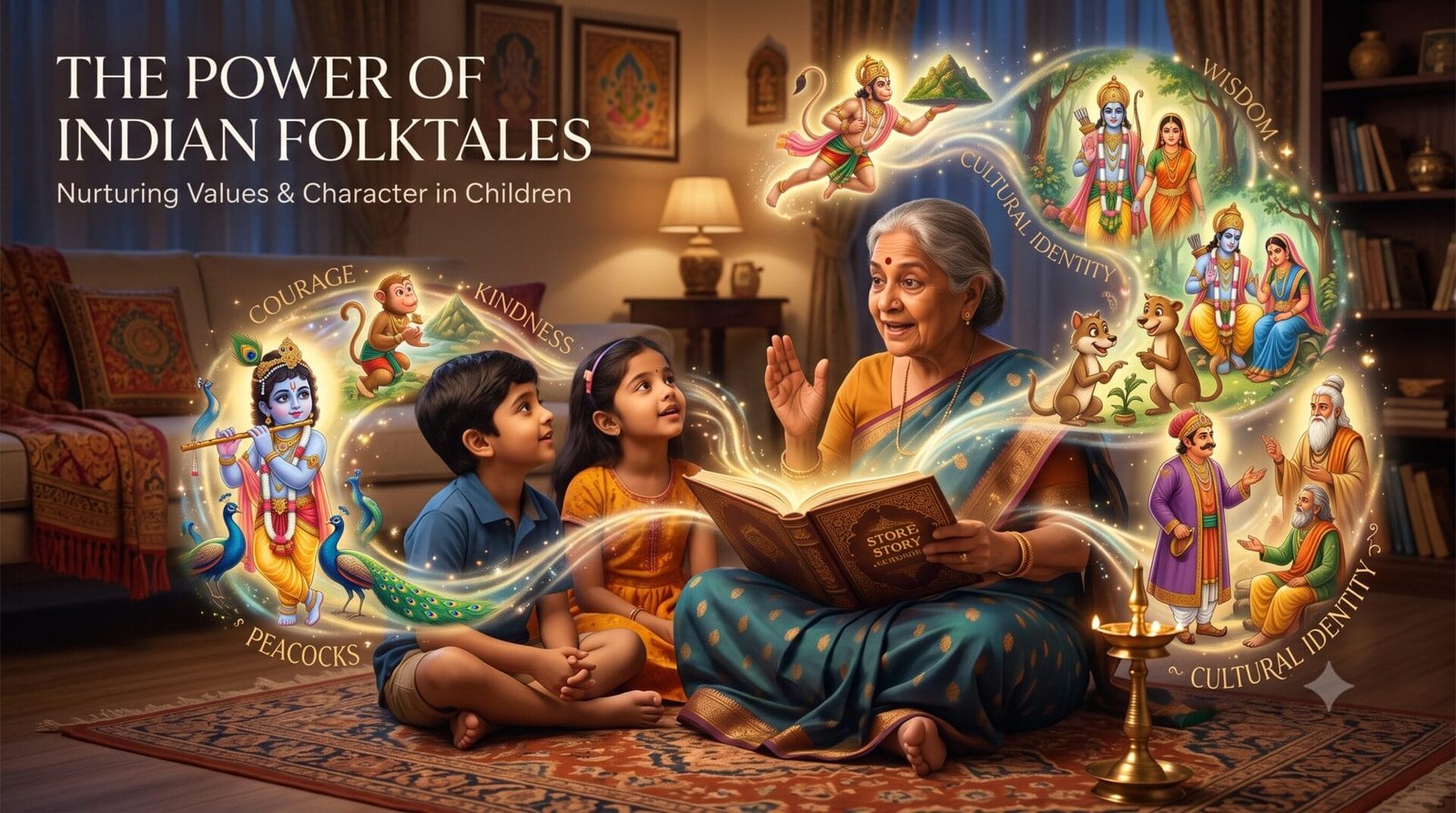
For generations, Indian families have passed stories down through bedtime conversations, festival traditions, and grandparents’ memories. These stories were never just entertainment — they quietly shaped imagination, values, and emotional understanding.
Even today, Indian mythology for kids and traditional folktales continue to help children feel curious, connected, and rooted in their culture, especially for families raising children abroad.
Why Children Naturally Connect With Mythological Stories and Folktales
Children are naturally drawn to stories filled with wonder, adventure, and emotion. Indian mythology and folktales hold their attention because the stories feel imaginative while the characters feel deeply human.
- The Appeal of Larger-Than-Life Stories
From magical forests and talking animals to brave warriors, wise sages, and clever kings, these stories spark imagination and encourage children to think beyond the ordinary. Rich storytelling introduces children to exciting worlds where courage, kindness, and wisdom are rewarded, making every story both entertaining and meaningful.
- Emotional Connection With Memorable Characters
Children often connect emotionally with characters like Krishna, Hanuman, or Birbal because they feel playful, brave, curious, or relatable in different ways. These characters experience challenges, friendships, mistakes, and victories, helping children recognize similar emotions in their own lives.
- Stories Help Children Understand Right and Wrong Naturally
Unlike direct advice, stories allow children to observe situations, choices, and consequences without feeling lectured. As they watch characters make difficult decisions, they begin to understand concepts like fairness, honesty, responsibility, and kindness through experience rather than instruction.
- Stories Many Indian Families Grew Up With
Many families continue sharing the same mythological stories for kids that they grew up hearing, including:
- Ramayana
- Mahabharata
- Panchatantra stories
- Akbar and Birbal tales
- Krishna stories
These Indian folktales for children continue to stay relevant because they blend imagination with meaningful life lessons.
What Children Learn Through Indian Mythology and Folktales
Indian stories often leave children with lessons that stay with them long after the story ends. Through memorable characters and situations, children slowly begin understanding emotions, values, relationships, and decision-making.
- Building Moral Values Through Stories
Stories from the Ramayana, Krishna tales, and Panchatantra stories introduce values like honesty, courage, compassion, wisdom, respect, and perseverance in ways children naturally understand and remember.
Because these lessons are woven into exciting adventures rather than presented as rules, children are more likely to remember them and recognize similar situations in their own lives.
- Emotional Development and Empathy
Listening to stories helps children recognize emotions like jealousy, kindness, fear, friendship, and sadness while also teaching them empathy and emotional awareness.
As children follow different characters through moments of struggle and success, they begin to understand that everyone experiences emotions differently. Discussing these moments with parents encourages children to express their own feelings, develop, and build stronger emotional intelligence from an early age.
- Problem-Solving and Critical Thinking
Many Indian folktales encourage children to think independently, understand consequences, and solve problems through observation and clever thinking rather than strength alone.
- Language and Communication Development
Storytelling improves vocabulary, listening skills, comprehension, and conversation while encouraging children to ask questions and express ideas more confidently. Storytelling also strengthens memory, attention span, and verbal communication, making it an enjoyable way to support early literacy and learning.
How Indian Stories Spark Imagination and Creativity:
- Encouraging Imaginative Thinking
Stories filled with magical kingdoms, talking animals, and heroic adventures encourage children to visualize new worlds and think creatively beyond everyday life. Imaginative thinking helps children become better problem-solvers while boosting confidence and curiosity.
- Inspiring Curiosity and Exploration
Mythological and folktale stories naturally make children curious about Indian festivals, traditions, gods, and history, turning storytelling into a gateway to cultural learning.
- Developing Storytelling and Writing Skills
Listening to stories often inspires children to create their own tales, act out scenes, draw favourite characters, and invent alternate endings. These creative activities strengthen storytelling abilities, improve writing skills, and encourage children to communicate their ideas with confidence.
Why Indian Mythological Stories Matter for Children Growing Up Abroad
- Building Cultural Identity and Connection
Indian stories for children abroad help them feel connected to their roots by introducing traditions, values, and family heritage naturally and engagingly.
- Understanding Festivals and Traditions
Stories behind festivals like Diwali, Holi, and Janmashtami help children understand the meaning and emotions connected to celebrations.
- Creating a Sense of Belonging
Hearing familiar names, traditions, and experiences in stories helps children feel proud of their cultural identity and more connected to their background.
Practical Ways Parents Can Bring These Stories Into Everyday Life
- Bedtime Storytelling Traditions
Even a short bedtime story each night can become a comforting family ritual children remember for years. Consistent storytelling not only builds strong family bonds but also creates positive reading habits.
- Reading Mythology and Folktales Together
Reading together encourages bonding, curiosity, and meaningful conversations between parents and children. Asking simple questions during or after the story helps children think more deeply about the characters and lessons.
- Using Audiobooks and Story Podcasts
Audiobooks and storytelling podcasts can make mythology and folktales part of everyday routines for busy families. Stories can be enjoyed during car rides, while travelling, or before bedtime, making cultural learning more accessible.
- Festival-Based Storytelling Activities
Sharing stories during festivals helps children connect celebrations with meaning and tradition. Parents can make these stories even more engaging by combining them with festive crafts, traditional recipes, drawing activities, or community celebrations. These experiences create joyful memories while helping children understand the significance of each festival.
- Encouraging Children to Ask Questions and Reflect
Simple conversations after storytelling can deepen curiosity, emotional understanding, and critical thinking. Asking questions like “What would you have done?” or “Why do you think the character made that choice?” encourages children to think independently and express their opinions.
- Bringing Stories Into Playtime
Children often understand stories more deeply when they actively participate. Parents can encourage role-playing, puppet shows, dress-up activities, or drawing favourite scenes from mythological stories.
Conclusion
Stories shape far more than imagination. They help children understand emotions, values, culture, and identity in ways that feel natural and lasting.
Whether shared through bedtime stories, festival traditions, or grandparents’ memories, Indian mythology and folktales continue to strengthen connections across generations while helping children feel rooted in who they are.
FAQs
- What is the right age to introduce mythology to children?
Children can begin listening to simplified mythology and folktales as early as preschool age using age-appropriate stories and language.
- How can parents simplify complex mythological stories?
Parents can focus on the main characters, emotions, and lessons instead of explaining every detail or timeline.
- Are mythological stories relevant for modern children?
Yes. Themes like courage, kindness, empathy, honesty, and resilience remain meaningful and relatable for children today.
- Which Indian folktales are best for younger children?
Panchatantra stories, Akbar and Birbal tales, and simple Krishna stories are ideal for younger children because they are engaging, imaginative, and easy to understand.
Author Bio:
Chitra Khanna is the Content Strategist at KLAY Preschools & Daycare, where she leads content creation focused on early childhood education and parenting. With a background in digital marketing and a passion for empowering families, Chitra develops resources that engage and inform parents, helping them navigate the critical stages of their children’s development. Her creative approach and deep understanding of educational trends ensure that her content is both relevant and impactful. Outside of work, Chitra enjoys exploring new learning methodologies and contributing to discussions on child welfare and growth.